


Safety of Plastic Surgery
You wouldn’t choose a podiatrist to perform open-heart surgery on you or your loved ones! Yet, there are thousands of patients who choose the wrong person, often not even a physician, to perform their cosmetic surgery.
Contents
Choosing Your Physician
 The horror stories are abundant. There are documented breast augmentations performed in someone’s home, even in garages, with predictably disastrous results. Some patients travel outside of the United States for cut-rate procedures, lured by the false promise of being pampered in an exotic locale. These patients suffer – not only predictable unsatisfactory results – but also painful and unnecessary side effects. In many cases, they then suffer the agonies of having these mistakes fixed by the qualified physician who they should have consulted from the beginning.
Yet, there is another segment of patients who feel safe in choosing any ‘qualified’ physician. Some states allow any licensed physician to perform his or her choice of cosmetic surgeries, whatever their training. In other states, there are even dental surgeons lobbying to be licensed to perform cosmetic surgery. The assumption that all physicians are qualified to perform cosmetic surgery safely couldn’t be further from the truth.
Certification
 The American Board of Plastic Surgery (ABPS) is one of 24 boards recognized by the American Board of Medical Specialties, and it is the only one that certifies physicians in the full spectrum of plastic surgery, including all cosmetic surgeries.
When you choose an ABPS certified physician, you are guaranteed the services of a specialist who has endured the most rigorous training. This includes graduation from an accredited medical school, five to seven years of internship and residency, including three to five years of training in general surgery and two years of training in plastic surgery. The physician must also complete demanding written and oral exams.
The only physician you should consider is one who has been certified by the American Board of Plastic Surgery.
When you interview physicians, be certain that they can share legitimate ‘Before and After‘ photographs of their work. Discern your comfort level with this physician, and whether all of your questions are willingly addressed. Also importantly, consider the quality of his or her staff, and of the facility where surgeries are performed.
Cosmetic surgeons vs plastic surgeons
Unlike a fully trained board certified plastic surgeon, many so-called ‘board certified’ cosmetic surgeons have often completed only a brief course in one cosmetic surgery procedure. This does not provide the physician with the depth of knowledge and experience of a plastic surgeon who is certified by the ABPS. That is why The American Board of Medical Specialties does not recognize as legitimate the ‘board of cosmetic surgery.’
Choosing Your Surgical Facility
 You wouldn’t have your wisdom teeth pulled in your dentist’s living room. Why not give equal consideration to your physician’s surgical facility? Your very life could depend, not only upon the skill of your surgeon, but upon the quality of this facility.
Accreditation
Your surgery should be performed at an accredited ambulatory surgery center, or at a hospital. It is unwise to have your surgery performed merely in a physician’s office, or procedure room. If your physician operates in a surgical facility, there are five crucial factors to consider:
- It is certified by the American Association for Accreditation of Ambulatory Surgery Facilities (www.AAAASF.org) or;
- It is certified by the Accreditation Association for Ambulatory Health Care (www.AAAHC.org) or;
- It is certified by Medicare or;
- Is it certified by the Joint Commission on the Accreditation of Healthcare Organizations (JCAHO) and;
- The facility has a transfer agreement with a local hospital. (This is necessary in an emergency situation when a patient needs to be transferred to a hospital).
Is your physician credentialed to operate at a local hospital? Does your physician have privileges to perform your chosen surgery in a hospital? If a hospital does not approve a surgeon as qualified to perform your procedure in its facility, this is a significant factor to consider for your safety. Has he or she been barred, disciplined, or suspended from any hospital?
To investigate the status of local physicians, visit the Medical Board of California
Anesthesia
 Like your surgeon, the anesthesiologist literally holds your life in the balance. It is therefore critical that you put your life in the best hands.
Many patients have preconceived notions about the type of anesthesia that is best for them. Unfortunately, these thoughts are often based upon hearsay, or upon informal research that has no scientific basis. While you are the final arbiter of your treatment, only an experienced physician can guide you properly in making the crucial decision about your anesthesia.
Many facilities employ trained nurse anesthetists. However, it is optimal to have anesthesia administered by an anesthesiologist rather than a nurse. Preferably, your anesthesiologist should be certified by the American Board of Anesthesiology.
This is not guesswork! Allow your physician to explain your safest anesthesia option.
The anesthetized patient must be monitored meticulously and constantly, with consideration for all medical conditions. The best person to do this is a physician who is trained and experienced in the practice of medicine, in the specialty of anesthesia. This is especially important in surgical facilities that operate independently. In such freestanding facilities, a nurse anesthetist might not have the adequate supervision of a physician anesthesiologist, or the support system required to properly address emergencies.
You should be skeptical about promises that extensive cosmetic surgery procedures can be performed under local anesthesia in an office, procedure room, or even in an office surgery room. Having an extensive procedure performed under local or ‘twilight anesthesia’ is not safer than having it done under general anesthesia. On the contrary, the risks of this ‘twilight sleep’ might be greater because procedures that take two hours under general anesthesia will take several more hours when you are inadequately anesthetized locally. The risks that your condition will become unstable will increase under this circumstance. Also, you will then have to deal with the side effects of the longer acting anesthetics that remain in your system, even after you go home.
Post-operative Care
 The risk of surgery does not end when you leave the operating room. There have been tragedies when very healthy people who had routine cosmetic surgery procedures performed by an expert surgeon die in the Recovery Room. Your safety requires adequate monitoring and care by an experienced Registered Nurse (RN). An accredited surgical facility generally requires that its nursing staff has these credentials and experience.
Your care during the 24-48 hours following surgery is crucial to your recovery. Therefore, prepare a friend or family member to assist you when you begin the recovery process at home. They must be physically capable of assisting you with tasks that you normally take for granted – such as leaving your bed and using the bathroom. Also, choose someone with enough common sense to know what to do in case of an emergency. Your physician should assure you that he or she would be available to answer your after-hour calls in case of an emergency.
In today’s society, there are many of us who do not have an extensive social support group. If you do not have someone to take care of you after surgery, there are many after care facilities available for plastic surgery patients. Also, there are qualified caregivers and nurses available to provide such care at your home.
Other Important Factors
Chronic Health Conditions
 Your safety during surgery depends on your overall health condition. Do you have diabetes, thyroid or heart disease? Before you undergo a cosmetic procedure, your general physician must have successfully optimized your condition and managed your risk factors. Once your condition has been optimized, your risks from surgery are very low.
Multiple Procedures
Many of us have witnessed televised depictions of dramatic results on patients who have multiple procedures performed within a short time frame. As a general rule, these “extreme” multiple makeovers are not a safe practice.
A responsible physician places your safety first, and will explain to you that only a certain number of procedures can be performed simultaneously to ensure your safety. The American Society of Plastic Surgeons opposes the performance of multiple, lengthy procedures that involve the risk of major blood loss.
Length of Procedures
National studies have shown that the risks of surgery rise significantly after six hours. If your procedure is going to take longer than six hours, your surgeon should ensure that your surgery is performed at a facility equipped for such a procedure, and that there will be adequate postoperative care and monitoring.
Extent of Blood Loss
Your surgeon or your general physician should perform appropriate blood testing before surgery to ensure that you are not anemic or prone to excessive bleeding. Also, procedures with anticipated blood loss of 500cc or greater should be performed at facilities where adequate blood and blood components are readily available for infusions.
Risk of ‘Blood Clots,’ Thrombosis, or Embolism
Some people have a higher risk of developing blood clots in their extremities that can travel to their lungs and heart (embolism), possibly causing their death. Your surgeon and surgical facility must be qualified to ensure the safety of the following higher risk patients:
- People who have a family history of embolism, or who are genetically predisposed to hyper-clotting;
- People with poor circulation in their extremities;
- People who are on contraceptives, hormone replacement, or medications that make their blood clot faster;
- People who are morbidly obese;
- People more than 40 years of age;
- People seeking procedures that require more than 30 minutes under general anesthesia.
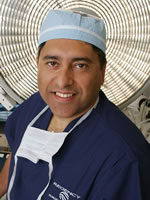 Please remember to take your plastic surgery endeavor seriously. After all, it is no different than any other surgery that you might undergo. Nevertheless, every year millions of people undergo plastic surgery procedures safely, with the joy of having the outcome that they were seeking.
With Best Wishes,
Soheil Sean Younai, MD, FACS
Board Certified Plastic & Reconstructive Surgeon